
Sex Offender Checks in Bibb County
The Alabama Law Enforcement Agency's CJIS division operates the Alabama Sex Offender Registry through its Community Information Center. Bibb County agencies submit registration information, and ALEA says the public system updates in real time from those submissions. The statewide registry is free. For a Bibb County search, select the verified county or ZIP route, or use a name when the person is known.
The registry reports more than 16,000 registrants statewide. That number is not a Bibb County count. No verified Bibb County total was supplied in the research, so it should not be inferred from a result screen. The Bibb County Sheriff's Office does not publish a separate Bibb County registry page, registration-unit address, schedule, or appointment policy. Call 205-926-4683 before a registration visit or when Bibb County procedure matters.
The statewide system and Bibb County office perform different work. ALEA publishes public data received from agency submissions. The sheriff or police chief handles registration, verification, and community notification under the statute. A searcher should use ALEA for the public profile and Bibb County law enforcement for a compliance concern, an address question, or the current Bibb County visit process.
This division explains why a profile update may depend on Bibb County verification before the revised information appears in the statewide public record.
Search Bibb County Registry Fields
The official ALEA portal blocked automated inspection with an HTTP 403 response. Official guidance verifies name search plus Bibb County and ZIP geographic inputs, but the exact labels, required markers, radius values, map controls, pagination, exports, and alert settings were not independently captured. Those details must be checked in a live browser rather than filled with guesses.
The ALEA Community Information Center is the primary official interface for a Bibb County sex offender search.
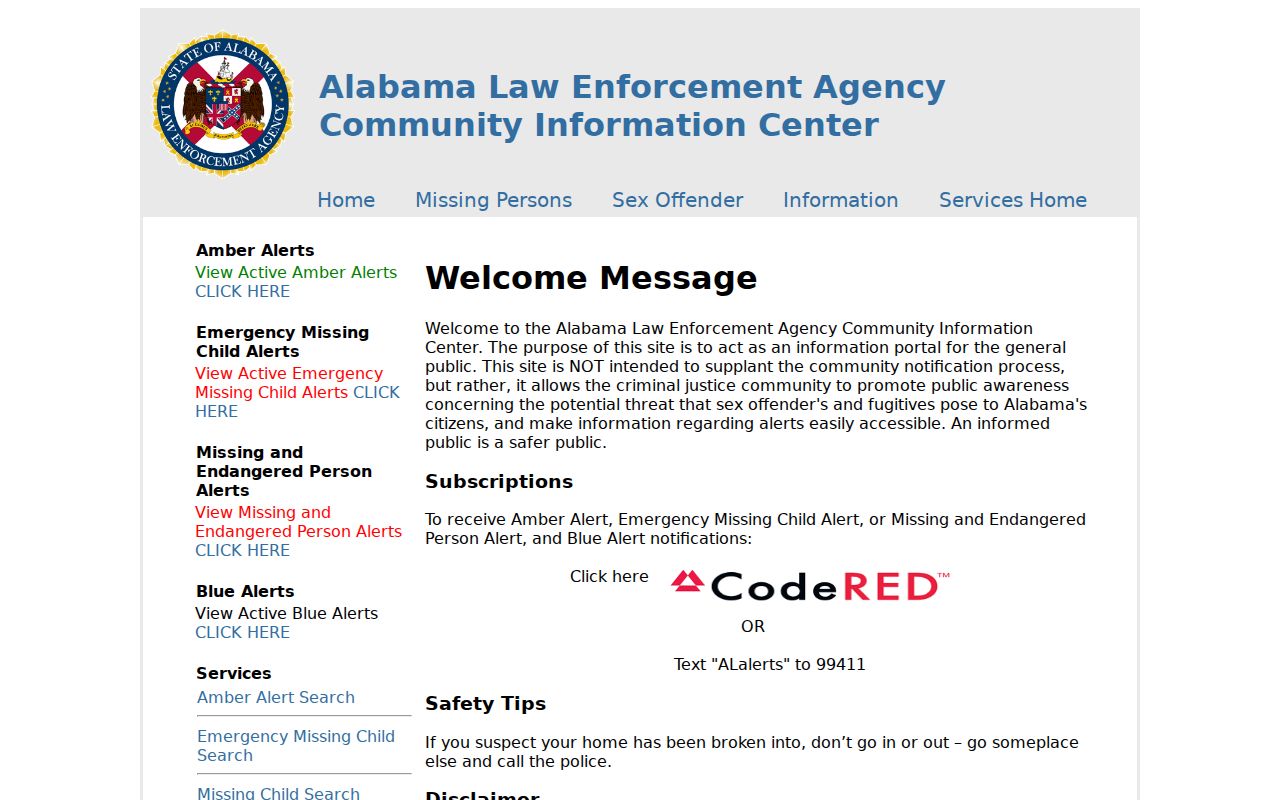
Use its current Bibb County search controls and conditions of use as displayed when the search is made.
How to Search the Alabama Registry
Start broad enough to avoid a spelling miss, then narrow the result with verified facts. Address data can change, so an apparent mismatch should be checked with Bibb County law enforcement rather than treated as proof of wrongdoing.
Name-only matching can be misleading when names are common or aliases appear. Compare several profile facts. A photograph, physical description, qualifying offense, jurisdiction, and listed location can help distinguish records. Never rely on one field when the result could concern a different person.
- Open the official ALEA registry and read its conditions and anti-harassment notice.
- Use the verified name mode, or select Bibb County or a relevant ZIP through the geographic search.
- Compare aliases, physical details, photograph, address, and offense information before deciding that a result is the intended profile.
- Note the profile's status and report a suspected address error or noncompliance concern to the appropriate Bibb County law-enforcement agency.
| Search control | Type | Required | Verified limit |
|---|---|---|---|
| Name search | Search mode | Not captured | Mode verified; exact field labels blocked |
| County | Geographic input | Not captured | Select Bibb County; exact control not captured |
| ZIP | Geographic input | Not captured | Input verified; format detail not captured |
| Address, city, radius, map | Unconfirmed controls | Unknown | Do not assume availability without live inspection |
Old Bibb County Registry Addresses
An old address can have several meanings. ALEA publishes information received from Bibb County agencies, while the registrant has a duty to report changes and Bibb County law enforcement verifies them. A lag or noncompliance issue may leave an address that no longer appears current. The correct response is to report the concern, not confront a person at the listed residence or workplace.
ALEA's official registry rules and guidance explains the reporting cycle, public-list limits, and Bibb County submission process.
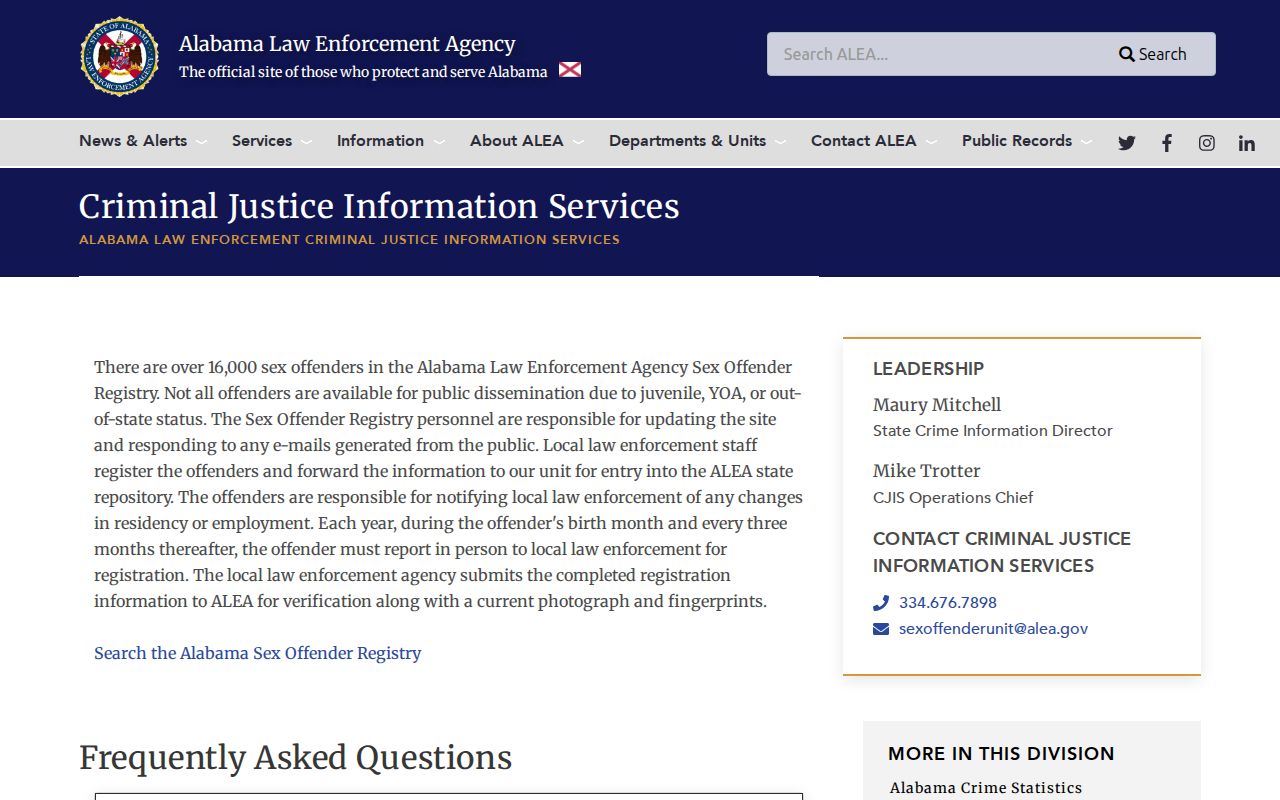
That guidance is the better source for interpreting an address issue than an unofficial directory or copied profile.
Inside a Registry Profile
Alabama law authorizes a defined public profile. The agency-side registration file is much broader, with identifiers, compliance material, and case information that the public cannot see. The public record should be read for what it says, without treating omitted data as evidence.
| Name and aliases | The registered name and known aliases selected for public display. |
|---|---|
| Photo and description | Current photograph plus sex, race, birth date, height, weight, hair, eyes, and supplied scars, marks, or tattoos. |
| Addresses | Residence and applicable work, volunteer, or school locations. |
| Vehicle | Vehicle and plate information authorized for public display. |
| Qualifying offense | Offense, statute, jurisdiction, and conviction date tied to registration. |
| Status | Registration information, including an absconded status where reported. |
| Not public | Nonconviction arrest history, SSN, victim identity, travel or immigration numbers, and email or messaging identifiers. |
ALEA has not made an individualized assessment of each listed person's current risk. A photograph or status is one registry fact, not a complete account of present conduct.
Public display also does not expose the full agency file. Law enforcement may hold more identifiers, victim and offense details, case data, travel information, online identifiers, and compliance records. Their absence from the public profile is a disclosure limit, not a statement that the fields do not exist.
Limits of Bibb County Registry Results
The public registry is conviction and registration data selected by Alabama's Sex Offender Registration and Community Notification Act. It is not a general criminal-record search. Public placement occurs after a qualifying conviction and release to probation or the end of sentence. Only offenses covered by Ala. Code §15-20A-5 are posted.
ALEA notes specific limits. A first conviction for Indecent Exposure or Sexual Misconduct is not posted. Juveniles are generally nonpublic unless assessed high risk, and youthful offenders are generally nonpublic unless older than 18 at the offense. Certain out-of-state, federal, military, or Indian-country matters may await due process. A no-result therefore cannot prove that a person has no criminal or court history.
The same limit works in the other direction. An ALEA profile is not a list of unrelated arrests, dismissed charges, or every case in a person's past. It reflects the qualifying conviction and registration facts Alabama law makes public. A court file is the better source when the goal is to understand the plea, judgment, or sentence behind a listed offense.
Alabama Registration Levels and Requirements
Alabama does not use a public federal Tier I, Tier II, and Tier III duration table for adult registrants. Adult registration is generally for life under Ala. Code §15-20A-3(b). Juvenile duration depends on the adjudication and assessment. A sexually violent predator is a court designation with added monitoring, not the name of an adult duration tier on the public portal.
| Alabama category | Duration | Public meaning |
|---|---|---|
| Adult registrant | Generally life | Alabama does not substitute federal adult tier durations. |
| Juvenile, listed very serious offense, age 14+ | Lifetime, with a petition possible after 25 years | Subject to the juvenile statute and court process. |
| Other qualifying juvenile | Generally 10 years from first registration | Duration differs from the adult rule. |
| Sexually violent predator | Designation, not a separate public adult tier duration | A court designation with added monitoring. |
Adult registrants report in person during their birth month and every three months after that. The Bibb County agency sends a current photograph and fingerprints. Section 15-20A-22 sets a $10 quarterly fee, but Bibb County payment, waiver, office, and appointment practice is not published.
The juvenile rows describe statutory duration, not a promise that every juvenile will appear publicly. Public visibility depends on the law's assessment and disclosure rules. Likewise, the sexually violent predator designation comes from a court and brings additional monitoring; it should not be rewritten as a federal-style tier label.
Bibb County Registration and Reporting
Call the Bibb County Sheriff's Office at 205-926-4683 to confirm which Bibb County agency handles a registration visit, the street location, hours, documents, appointment process, and payment or waiver practice. The government's listed sheriff address is 157 SW Davidson Drive, Suite 200, Centreville. Another official association listing uses 183 SW Davidson Drive, so a call matters before travel.
For a suspected address mismatch or failure to comply, report the facts to Bibb County law enforcement. Avoid assumptions based on an old profile. ALEA registry staff can be reached at 334-676-7898 or sexoffenderunit@alea.gov for state-system questions. Bibb County officers handle verification and send updates to ALEA for publication.
Give the office the profile details, address concern, and date observed without attempting personal contact. Law enforcement can decide whether the issue reflects a recent move, a submission lag, or possible noncompliance. That route protects safety and keeps the update process with the agency that can verify it.
Bibb County Search and NSOPW
ALEA is the direct Alabama source. The National Sex Offender Public Website, operated by the U.S. Department of Justice, adds a cross-state search layer. It is useful when an address, move, or identity may cross state lines, but it does not replace the Alabama source or Bibb County law enforcement for a local compliance concern.
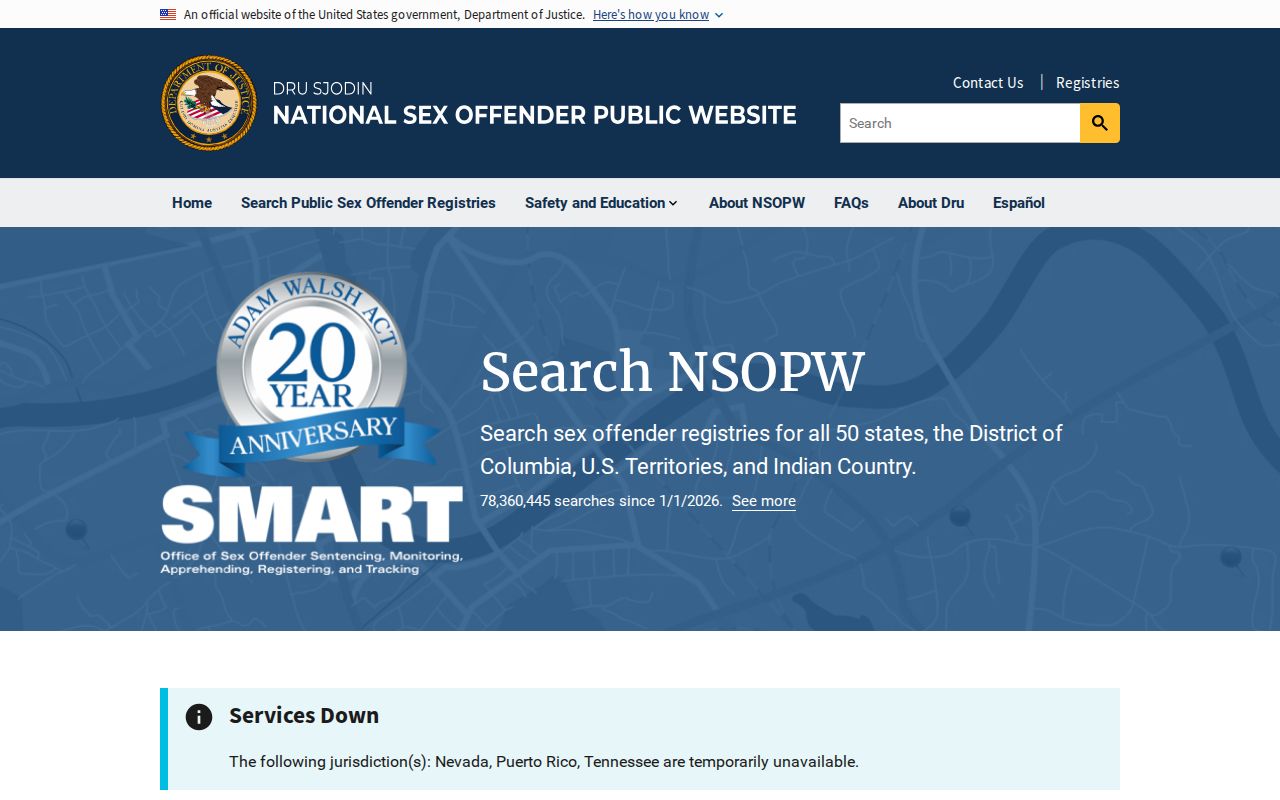
Use the national search to broaden geography, then verify Alabama details through ALEA and the proper Bibb County office.
Community Notification and Lawful Use
Community notification runs through the sheriff or police chief to people, schools, and childcare facilities within Alabama's statutory rules. A new registration does not mean that every neighbor will receive a new flyer in every circumstance. Public registry information supports awareness and sensible safety planning. It is not permission for contact, punishment, threats, or public confrontation.
Registry misuse is unlawful: Ala. Code §15-20A-8(h) bars using registry information to injure, harass, or commit a crime against a registrant or anyone at a listed home or workplace. Civil or criminal consequences may follow.
A suspected violation should go to law enforcement. The registry does not authorize vigilantism, and ALEA does not certify each person's current danger level.
For personal safety, record the concern, avoid direct contact, and let the agency with statutory authority investigate and correct the public data.